About us
Rede Cerrado – The Cerrado Network
Rede Cerrado was created in 1992 during the United Nations Conference on Environment and Development, known as Eco-92 or Rio 92. Its creation was marked by the signing of the Cerrado Treaty, a document that established the commitment of its signatories to address the threats already present in the biome. Since then, the main objective of Rede Cerrado has been the ongoing fight for the conservation of the biome and the defence of its traditional peoples and communities, with the mission of promoting social justice and environmental sustainability.
Currently, we are a broad civil society network, composed of more than 60 member entities and indirectly bringing together more than 300 organisations that share the socio-environmental cause of the Cerrado. The diversity of committed actors is our greatest asset, and we are represented by 22 segments of Traditional Peoples and Communities who are the true guardians of the Cerrado’s biodiversity. We work strategically in various socio-environmental public spaces, acting to propose, monitor and evaluate public policies that impact the Biome and its inhabitants.
Main guidelines
Defence of the Cerrado
Rede Cerrado fights for the conservation of the biome that is the cradle of waters and home to one of the greatest biodiversities on the planet. The Cerrado brings together an impressive diversity of landscapes — fields, trails, dry forests, savannahs and gallery forests — all threatened by the loss of more than 52% of their native vegetation as a result of advancing deforestation and monoculture farming. Defending the Cerrado means protecting its waters, its peoples and the climate balance of Brazil and the world.
Traditional Peoples and Communities
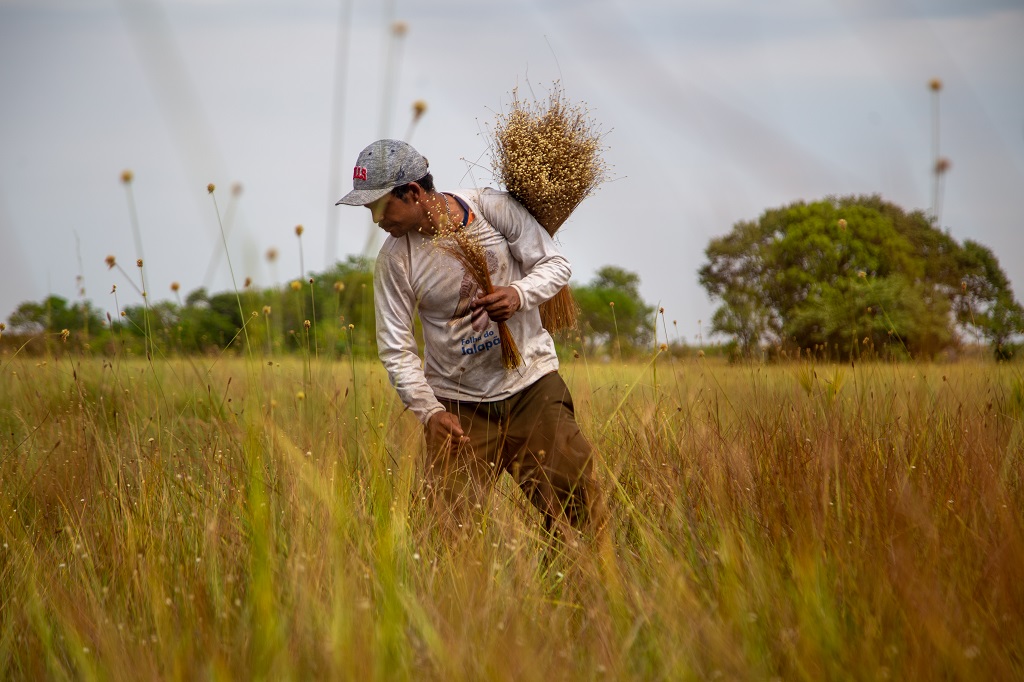
The ancestral and traditional populations of the Cerrado — comprising 83 indigenous ethnic groups, more than 100 quilombola communities, 22 segments of traditional peoples and communities, as well as hundreds of family farmers, settlers and extractivists — are guardians of the biome’s ecological, cultural and socio-biodiversity heritage. Their ways of life, knowledge and production practices support the conservation of ecosystems, and their struggle for territorial rights and historical and cultural appreciation is an essential part of defending the living Cerrado.
Socio-environmental and productive justice
Climate, territorial, socio-environmental and productive justice stems from the wisdom and knowledge accumulated in these territories. The community-based, agroecological and sustainable practices carried out by indigenous peoples, quilombolas, traditional communities and family farmers are fundamental to ensuring the sustainability of the Cerrado, guaranteeing the conservation of soil, water and biodiversity, while strengthening the economic and cultural autonomy of its populations.
Representativeness
Rede Cerrado is recognised for the legitimacy of its history and the wide diversity of organisations that make up its social base, expressing the cultural, social and political richness of the territory. Its composition includes ancestral and traditional populations — indigenous peoples, quilombolas, traditional communities and family farmers — alongside social movements, community-based collectives, cooperatives, producers, technical and socio-environmental organisations, and activists committed to socio-environmental justice. This breadth strengthens its legitimacy as the collective voice of the Cerrado, present in councils and decision-making spaces at the municipal, state and national levels, where it advocates for the guarantee of rights, the conservation of biodiversity and the valorisation of ways of life.

Mission and Values
Mission
To promote the conservation of the Cerrado biome and the appreciation of its socio-biodiversity, bringing together peoples, traditional communities and civil society organisations to defend rights, strengthen public policies, promote sustainable development and preserve ancestral ways of life.
Values
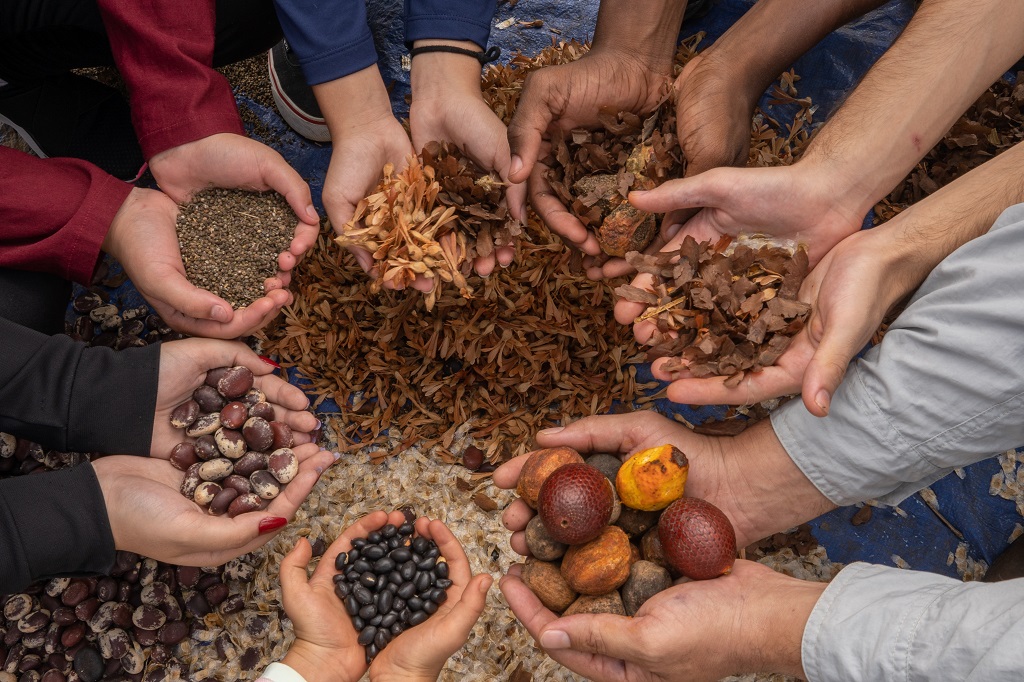
The strength of Rede Cerrado lies in its diversity and in the fact that it is the only inter-ethnic network that brings together indigenous peoples, quilombolas, ancestral and traditional populations, family farmers, settlers, extractivists and socio-environmental organisations that defend the biome. This diversity makes the Network a collective, representative and legitimate voice in defence of life, land and territory.
- Unity and coordination: uniting and coordinating forces in the territories in a representative, ethical and dialogue-based manner, without self-interest, but rather around collective interests.
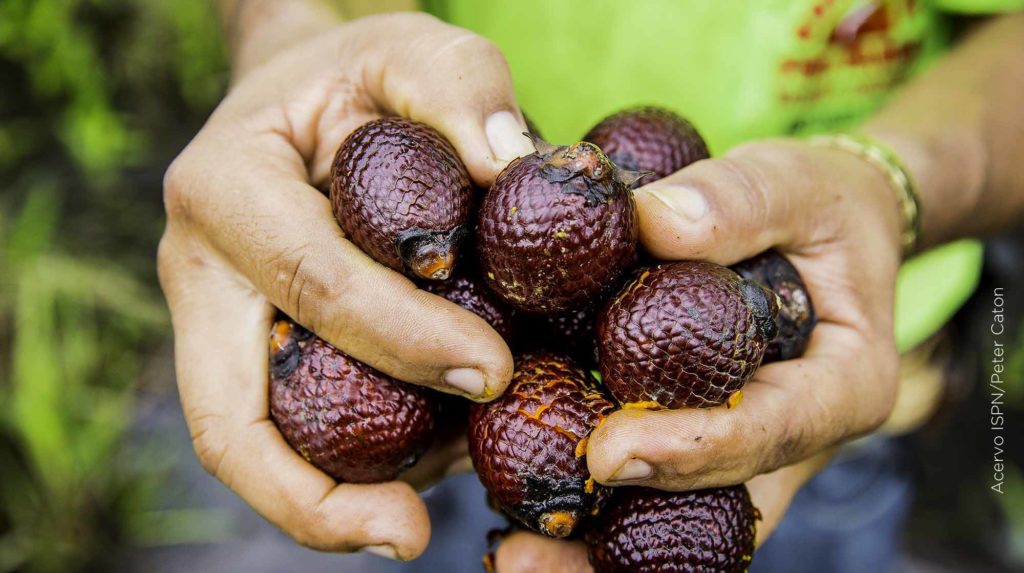
- Socio-biodiversity and ways of life: valuing and strengthening the ways of life, production and knowledge of ancestral and traditional populations, especially through socio-bioeconomics and agroecology, as alternatives for resistance and good living.
- Climate and socio-environmental justice: being an active voice for climate, territorial, socio-environmental and productive justice, recognising peoples and communities as protagonists in tackling climate change.
- Rights and justice: fighting against territorial conflicts and for the fulfilment of rights guaranteed in national and international frameworks — such as ILO Convention 169, Decree No. 6,040/2007 (National Policy on Traditional Peoples and Communities), the Federal Constitution of 1988 (Articles 231 and 232 for indigenous peoples), Decree No. 4,887/2003 (recognition and titling of quilombola lands) and Law No. 11,326/2006 (family farming).
- Conservation with life: working to preserve the Cerrado in harmony with the people who live there, combating deforestation, land conversion and water scarcity.
- Respect for diversity: recognising and valuing the cultures, practices and knowledge that make up the socio-cultural richness of the Cerrado, ensuring space for women, young people and different social and ethnic expressions.
- Cooperation and solidarity: fostering partnerships between territories, peoples and organisations, building paths of resistance and transformation based on dialogue and collectivity.
Rede Cerrado Organisations
More than 60 civil society organisations are part of Rede Cerrado as member entities. In addition, more than 300 grassroots organisations linked to our member entities also engage in dialogue and are present in Rede Cerrado.
See the list of organisations (in alphabetical order)
| ORGANIZATION | STATE |
| A vida no Cerrado | DF |
| ACA – Associação Camponês | MA |
| Agência 10envolvimento | BA |
| Alternativas para a Pequena Agricultura no Tocantins | TO |
| Animação Pastoral e Social no Meio Rural | MG |
| Articulação Pacari – Plantas Medicinais do Cerrado | GO |
| Articulação Rosalino Gomes de Povos e Comunidades Tradicionais | MG |
| Associação Alternativa Terrazul | DF |
| Associação Amanu – Educação, Ecologia e Solidariedade é uma associação civil | MG |
| Associação Central das Comunidades Veredeiras | MG |
| Associação Comunitária dos Artesãos do Bairro São Raimundo | TO |
| Associação de Desenvolvimento Comunitário do Caxambu | GO |
| Associação de Mulheres Trabalhadoras Rurais de Buriti do Tocantins | TO |
| Associação de Trabalhadores Rurais do Vale do Corda | TO |
| Associação dos Apicultores do Bico do Papagaio | TO |
| Associação dos Retireiros do Araguaia | MT |
| Associação em Áreas de Assentamento no Estado do Maranhão | MA |
| Associaçao para Gestão Socioambiental do Triângulo Mineiro | MG |
| Associação Regional das Mulheres Trabalhadoras Rurais do Bico do Papagaio | TO |
| Associação Wyty Catë (Povo Timbira – apoio via CTI) | MA |
| Associação Xavante Warã | MT |
| Casa de Cultura Cavaleiro de Jorge | GO |
| Central de Cooperativas Agroextrativistas do Maranhão | MA |
| Centro de Agricultura Alternativa do Norte de Minas | MG |
| Centro de Agricultura Alternativa Vicente Nica | MG |
| Centro de Educação e Cultura do Trabalhador Rural | MA |
| Centro de Pesquisa e Capacitação do Cerrado | MS |
| Centro de Tecnologia Agro-Ecológica de Pequenos Agricultores | GO |
| Centro de Tecnologias Alternativas | MT |
| Centro de Trabalho Indigenista | DF |
| Centro Internacional de Pesquisa Agroflorestal | DF |
| Cooper Frutos do Paraíso | GO |
| Cooperativa Central do Cerrado | DF |
| Cooperativa de Trabalho de Prestação de Serviços para o Desenvolvimento Rural da Agricultura Familiar | PI |
| Ecologia e Ação | MS |
| Federação de Apicultura e Meliponicultura de Mato Grosso do Sul | MS |
| Federação de Órgãos de Assistência Social e Educacional – Regional Mato Grosso | MT |
| Fundação Darcy Ribeiro | DF |
| Fundação Mais Cerrado | DF |
| Fundação Pró-Natureza – Funatura | DF |
| Instituto Aldeias | GO |
| Instituto Altair Sales | GO |
| Instituto Ambiental Vidágua | SP |
| Instituto Brasil Central | GO |
| Instituto Cerrados | DF |
| Instituto de Desenvolvimento Ambiental | |
| Instituto de Desenvolvimento Sustentável e Apoio a Agricultura Familiar | DF |
| Instituto de Educação e Pesquisa Ambiental Planeta Verde | SP |
| Instituto de Permacultura: Organização, Ecovilas e Meio Ambiente | DF |
| Instituto de Pesquisa Ambiental da Amazônia | DF |
| Instituto EcomAmor | GO |
| Instituto Internacional de Educação do Brasil | DF |
| Instituto Padre João Peter | MT |
| Instituto Permacultura Cerrado e Pantanal | MS |
| Instituto Plantadores de Água | GO |
| Instituto População, População e Natureza | DF |
| Instituto Rosa e Sertão | MG |
| Instituto Sálvia Soluções Socioambientais | DF |
| Instituto Socioambiental | |
| Instituto Veadeiros | GO |
| Mobilização dos Povos Indígenas do Cerrado | MT |
| Movimento de Mulheres Trabalhadoras na Luta | |
| Movimento Interestadual das Quebradeiras de Coco Babaçu | TO/MA/PI/PA |
| Mulheres em Ação no Pantanal | MS |
| Núcleo Gestor da Cadeia de Valor do Pequi e Outros Frutos do Cerrado | MG |
| OCA Brasil | GO |
| Pesquisa e Conservação do Cerrado | DF |
| Rede de Agroecologia do Maranhão | MA |
| Rede de Sementes do Cerrado | DF |
| Sindicato Nacional dos Trabalhadores de Instituição de Pesquisa e Desenvolvimento Agropecuário | DF |
| World Wide Fund for Nature – Brasil | DF |
Organisational structure
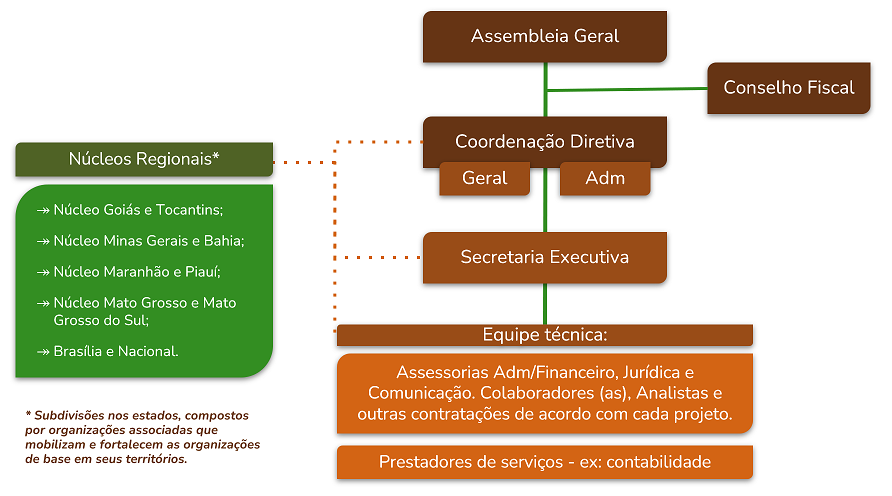
Rede Cerrado is a non-profit, private, nationwide association composed of representatives of indigenous peoples, quilombolas, traditional communities, organised groups and civil entities, all operating in the Cerrado, whose objective is the conservation of the Cerrado and the promotion of sustainable livelihoods in this biome, and who share the Rede Cerrado’s Charter of Principles and the Cerrado Treaty (both in Portuguese).
To read the full Rede Cerrado Statute, click here (in Portuguese).